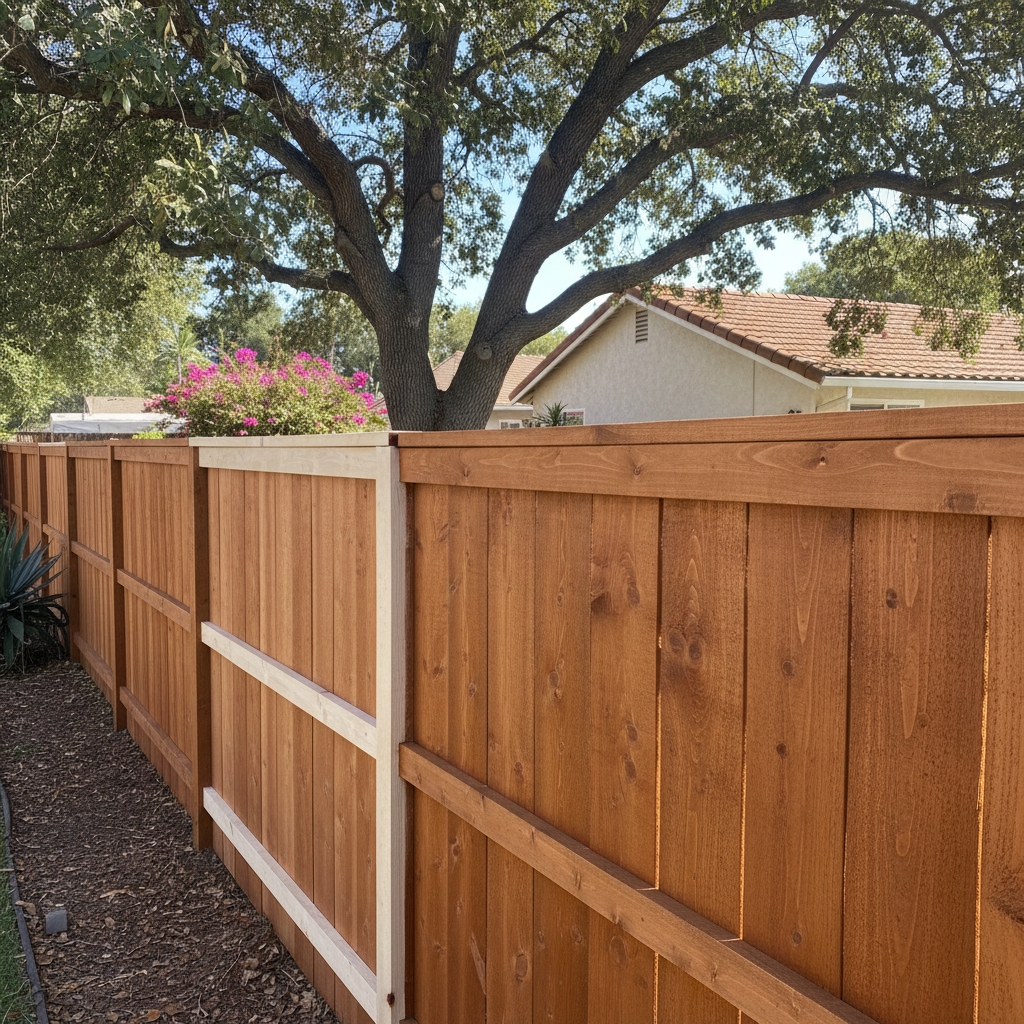
Should You Stain or Paint Your Fence?
Okay, let's talk about your fence. Maybe it's looking a bit tired, bleached by the sun, or just not quite what it used to be. The big question always comes down to this: 'Should I stain it or paint it?' It's not just about picking a color, you know; it's also about how you'll protect it and keep it looking good.
Stain is fantastic if you love seeing the natural wood grain. It soaks into the wood, which helps protect it from moisture and those harsh UV rays, but it still lets that beautiful texture peek through. You've got options: transparent, semi-transparent, and solid stains. Transparent just makes the natural color pop a bit more. Semi-transparent adds a touch of tint while still showing the grain. And solid stain? That gives you a more opaque color, almost like paint, but you can still feel some of the wood's texture underneath. It's not a full paint job, though.
Paint, on the other hand, gives you a completely solid, opaque finish. It sits right on top of the wood, creating a protective layer. You get a huge palette of colors to choose from, which is super if you want to match your house or make a real statement. The downside? It can peel and chip over time, especially with our hot Garden Grove summers and those occasional damp mornings. And when it peels, fixing it is a much bigger hassle than just reapplying stain.
For most wood fences, especially if it's cedar or redwood, I usually suggest staining. It's generally easier to keep up with long-term, and it really lets the wood's natural character shine. Now, if you've got a pressure-treated pine fence or you're dead set on a very specific color, then paint might be the better choice for you.
Before You Start: Prep is Key
Seriously, I can't emphasize this enough: 90% of your project's success hinges on the prep work. If you cut corners here, you'll definitely regret it later. Believe me, I've seen plenty of fences in neighborhoods like West Grove that look amazing for a year, then start flaking because someone rushed the cleaning. What a waste!
- Clean It Up: Your fence needs to be absolutely spotless. Use a pressure washer on a low setting – you really don't want to damage the wood! – or just a good scrub brush with some wood cleaner. Get rid of all the dirt, mildew, and any loose old paint or stain. Then let it dry completely. And I mean *completely* – give it at least 24 to 48 hours.
- Repair Any Damage: Replace any boards that are rotted, tighten up loose nails or screws, and sand down rough spots. You're aiming for a smooth, solid surface here.
- Protect Everything Else: Cover up your plants, shrubs, and anything else you don't want getting stained or painted. Drop cloths are your best friend, truly. Tape off any parts of your house or neighboring structures that are close to the fence, too.
- Pick the Right Day: Avoid really windy days (unless you're okay with accidentally painting your neighbor's car) and days that are either too hot or too cold. Mild, dry weather is perfect. Check the forecast; you certainly don't want rain washing away all your hard work.
During the Project: Application Tips
Alright, you've prepped, you've gathered your materials. Now for what I'd call the fun part. Whether you're staining or painting, the application process is pretty similar.
- Stir, Stir, Stir: Make sure your stain or paint is mixed really well. The pigments tend to settle at the bottom, you know.
- Apply Evenly: Use a good quality brush, roller, or sprayer. If you're using a sprayer, it helps to back-brush immediately after spraying; this gets the product to penetrate better and stops drips. Work in small sections, always moving with the wood grain.
- Two Thin Coats are Better Than One Thick: This is a golden rule, absolutely. Thick coats can lead to drips, uneven drying, and peeling. Put on a thin, even coat, let it dry according to the manufacturer's instructions, and then apply a second thin coat.
- Watch for Drips: Keep an eye out for drips and runs, especially on those vertical surfaces. Catch them quickly with your brush before they dry.
After the Project: Maintenance and When to Call a Pro
You did it! Your fence looks fantastic. So, how do you keep it that way?
Regular cleaning is your best defense, hands down. A light wash with a hose and a soft brush once a year can work wonders. Keep an eye out for any spots that start to look faded or worn. Stains usually need reapplication every 2-5 years, depending on the product and how much sun your fence gets. Paint might last a bit longer, but when it starts to chip, you'll need to scrape, sand, prime, and repaint those areas.
So, when's the right time to call in a pro? If your fence is really old and needs a ton of repairs before you can even think about staining or painting it, or if you just don't have the time or the right tools, that's a good moment to bring in the experts. Pressure washing can be tricky, too; if you're worried about damaging the wood, a pro has the right equipment and experience. Also, if you have a really large, complex fence with lots of intricate details, it might be worth getting a quote.
For most homeowners, staining or painting a fence is a totally doable DIY project. It's a bit of work, sure, but the satisfaction of stepping back and seeing your fence looking brand new? That's pretty great. If you ever need a hand with repairs or a full fence replacement, you know who to call at Garden Grove Fencing Solutions. But for a fresh coat, you've got this!